The grandeur of the grain: a guide to different woods for bespoke internal doors
Why is wood so revered for bespoke internal doors?
Visually, wood speaks for itself. Because its colours are derived from natural extracts, they’re often characterised by rich colours that interact beautifully with light. And, unlike synthetic materials, every creation is completely unique, adding visual depth and motion that simply can’t be replicated. Thanks to our evolutionary drive to connect with nature – a concept known as biophilia – our brains, as humans, also register an innate sense of calmness from these organic compounds, creating a grounded comfort that’s beautifully fitting when you’re trying to make a house a home.
Beyond its beauty, wood is a material of extraordinary intelligence too. Engineered timber cores – the foundation of every Deuren door – deliver structural stability that endures effortlessly, resisting the warping and movement that solid constructions are susceptible to over time. Wood also offers excellent thermal and acoustic performance, insulating spaces from both heat loss and unwanted sound to improve the way in which every interior environment is experienced.
What’s more, wood ages with a grace that synthetic alternatives simply cannot emulate. As time passes, the grain deepens, the patina evolves, and a door that was showstopping on the day of installation becomes something richer still over the years. It’s therefore an ideal choice for architects, designers, and self-builders who view a door as a long-term investment in quality.
Species to suit every architectural style
With a world of woods and finishes designed to suit every style and taste, there’s an option to bring every ambition to life. But this is far from an exhaustive list. Consider it a curated glimpse into what’s possible with wood – a starting point for a conversation Deuren is always delighted to continue.
Warm and classic
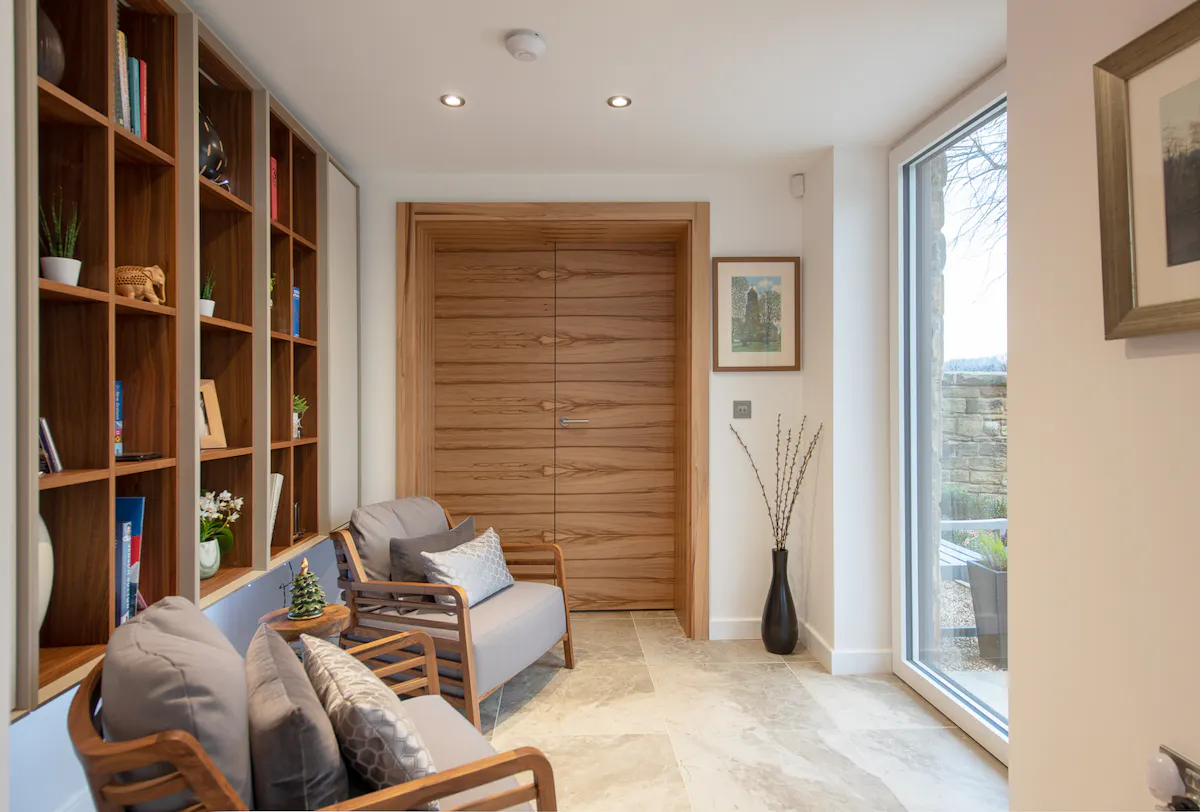
There’s a reason mid-toned timbers endure as the cornerstones of luxury residential design. Each species carries an inherent sense of belonging – a warmth that makes a hallway feel welcoming, a living space feel grounded, and a bedroom feel cosy and cocooning.
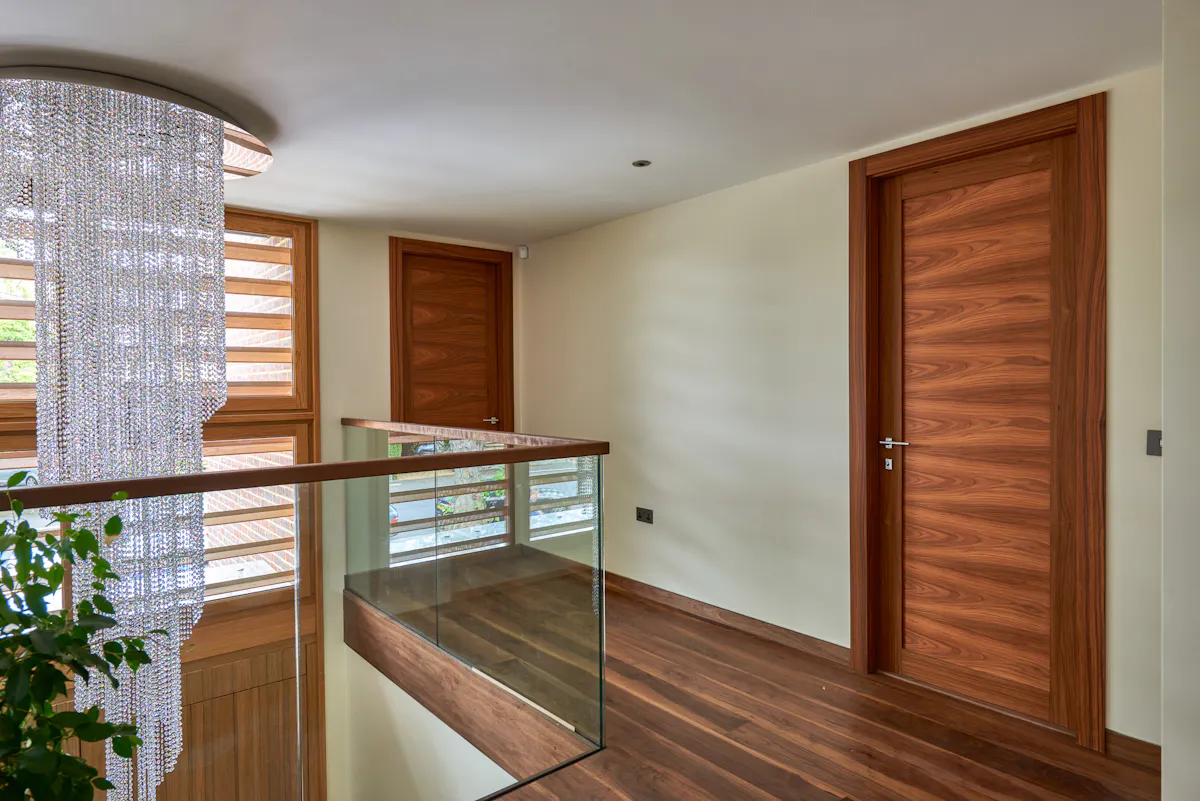
Satin walnut, often referred to as Liquidambar, is one such example. It boasts stunning blonde tones that ripple with reddish browns and hints of grey, and an intricate grain that breaks into stunning spiral patterns, offering detail and depth that rewards particularly close attention. Options like honey oak bring an equally confident presence. Its open, flowing grain has an exquisite architectural quality, and its natural amber tones radiate a gorgeous golden glow that suits traditional and transitional spaces alike. Meanwhile, for a more striking textural contrast, hickory’s heartwood shifts from light to medium brown sapwood with a grain that can range from straight and assured to dramatically wavy and irregular.
Light and contemporary
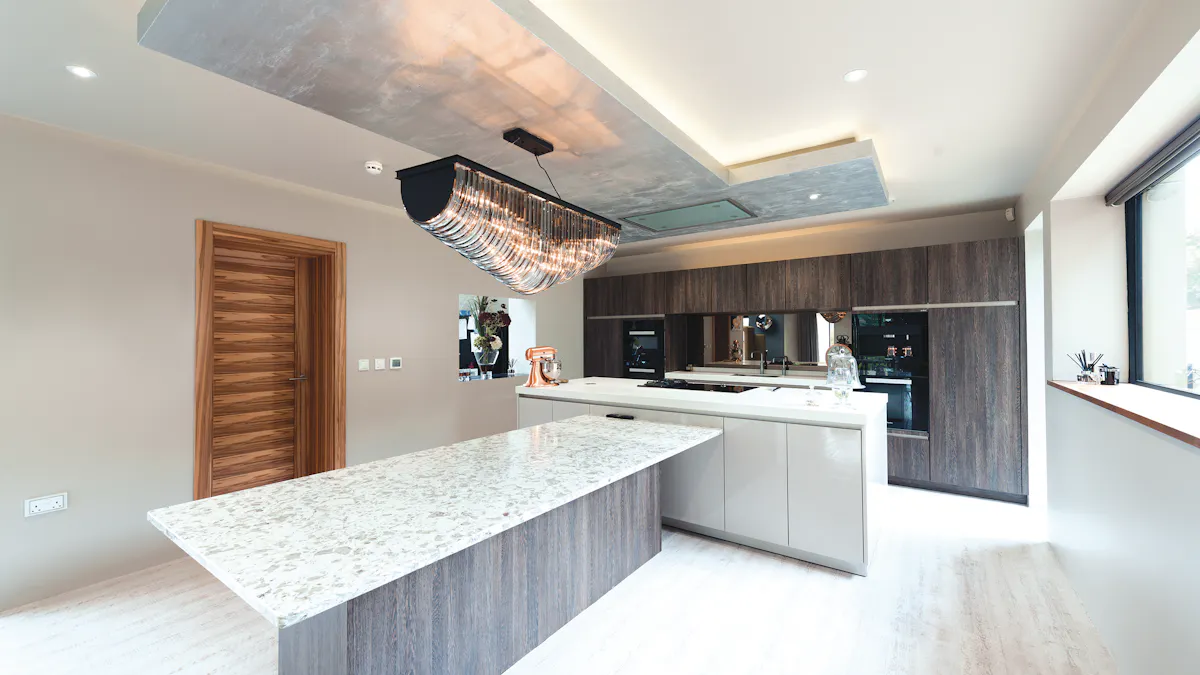
For spaces built around restraint, muted woods offer a simple yet equally characterful palette shift. Maple is the ultimate purist's choice – a creamy white timber with a fine, lustrous texture and a silky surface that reflects light with extraordinary consistency. Its near-neutral tone makes it an ideal backdrop for bolder architectural decisions, while its receptivity to stain gives it a surprising versatility, should colour be on the cards for your project.
Grey ash is another popular option, with slightly richer textural qualities. Its dyeing process draws out cool mineral tones while keeping the warmth of the underlying grain alive, sitting comfortably alongside the concrete and stone palettes that define so much contemporary architecture. Meanwhile, olive ash introduces somewhat of a wilder note. The dark, irregular streaking that develops naturally in mature ash heartwood makes each door entirely unrepeatable, with tones drifting between pale blonde and deep olive. This is a family of timbers for doors that must hold an elegant yet understated space within a wider architectural scheme.
Dramatic and expressive
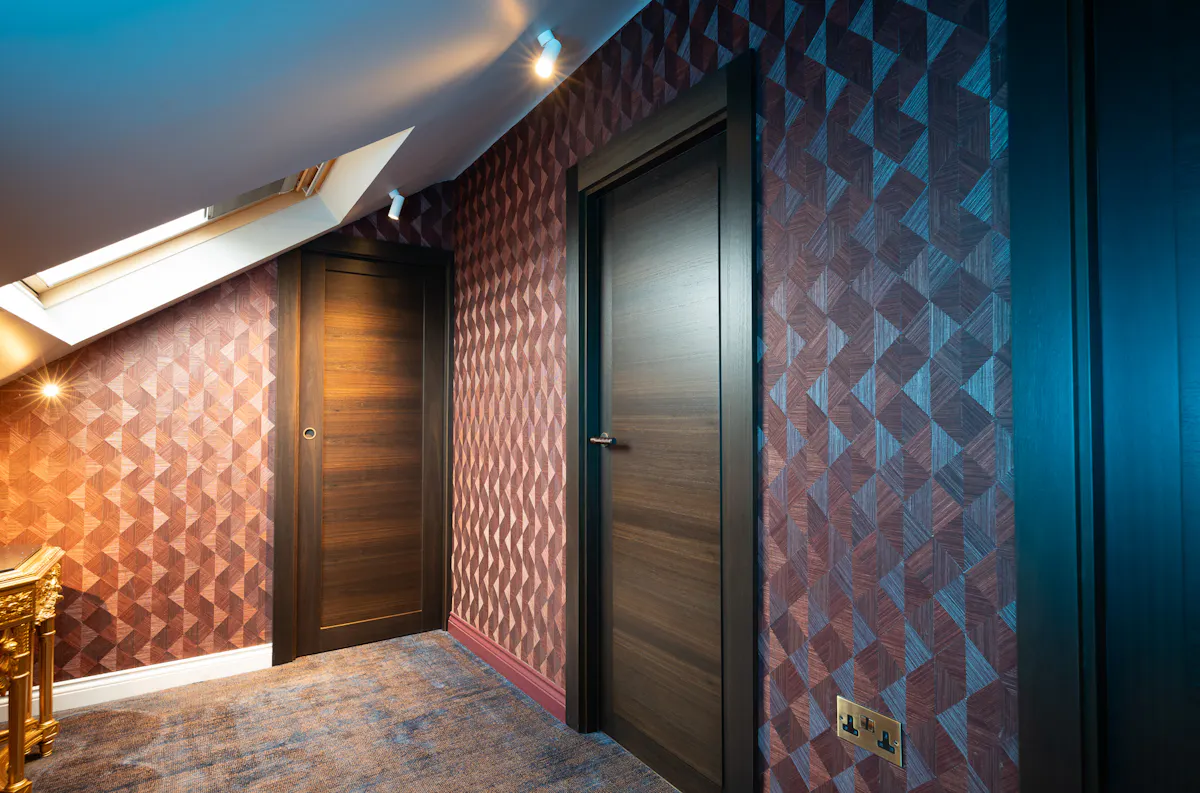
For discerning designs that dare to stand out, look for head-turning woods with irregular grain patterning, or rich compounds that are naturally characterful in construction. London plane – known in the trade as lacewood – produces one of the most visually spectacular surfaces in the timber world. Quarter-sawing the wood reveals a tessellated patterning of red, brown, and grey flecks across an even ground, creating a mottled, almost mineral effect that feels closer to textile than timber.
Zebrano is another standout option, among the world's most recognisable exotic timbers. With blackish-brown streaks that cut cleanly through a creamy base, it creates a breathtaking graphic impact with ease, announcing ambition from the moment you enter a space. In contrast, dark oak works through depth rather than pattern. Oak's sweeping growth rings and open grain take on a brooding intensity in smoked or darkened variants, shifting and igniting when light plays across the surface. Paired with gold hardware, it produces a dramatic, theatrical effect that stops guests in their tracks immediately.
Deep and rich
At the furthest end of the spectrum sit the timbers that deal in depth and atmosphere. Rosewood is among the most luxurious available – olive brown in tone with deep black streaks running through a fine grain that carries an almost polished quality. When finished with lacquer or oil, it achieves a jewel-like intensity that very few species can rival.
Dark smoked larch is another standout timber defined by its structure. The smoking process intensifies the contrast between growth rings, producing strongly defined lines across a warm brown ground – a surface that feels architectural in its clarity, and at home in both contemporary and traditional settings. Meanwhile, black ash pushes into a mysteriously dark territory through dyeing, leaving the open figuring of ash just visible beneath as a ghost of texture. This is an infinitely sophisticated choice for art deco-influenced interiors playing with shadow and material contrast.
Which elements of the design can be uniquely specified?
Finding the perfect wood species is only the beginning. With Deuren's bespoke approach, every detail of a door's character can be shaped to reflect the precise vision behind a project. Size and configuration can be tailored to suit any architectural proportion. Laterals and transoms can be used to divide the face of a door with deliberate geometry, creating effortless rhythm and structure. Handles and hardware become a final flourish of jewellery. And inlays, cladding, and textural carving introduce tactile depth, while even the grain direction itself can be specified to run horizontally or vertically, altering the visual dynamics of a door and the space it inhabits.
Finish is also entirely in your hands. From natural oils that honour the wood's rawness to lacquered surfaces that lend a sleeker resolve, the possibilities are limitless. And, crucially, wood is not the only option. For those who desire the structural integrity and acoustic excellence of a timber door but wish to express a bolder colour, paint is a perfectly valid and spectacular choice – and it can be distinct on either side of the leaf to suit two different interior schemes. From glass, fabric, and leather to specialist finishes and combinations that bring multiple materials together, our portfolio expands further still.
Dare to dream bigger with Deuren
For more than 25 years, Deuren has been a trusted partner to architects, interior designers, and homeowners who refuse to compromise on the extraordinary. By integrating into your team at the earliest possible build stage, we apply rigorous attention to detail to ensure even the boldest visions can be brought to life with ease – taking the stress of specification off your mind entirely.
We’d love to show you what we’re capable of. Book a visit to our workshop and showroom to experience Deuren doors in person, and get the wheels of your next project in motion. Or, get in touch to speak with our experts.