Brass, bronze, and beyond: accentuating doors with bespoke metal inlays
Creating a striking, contrasting character
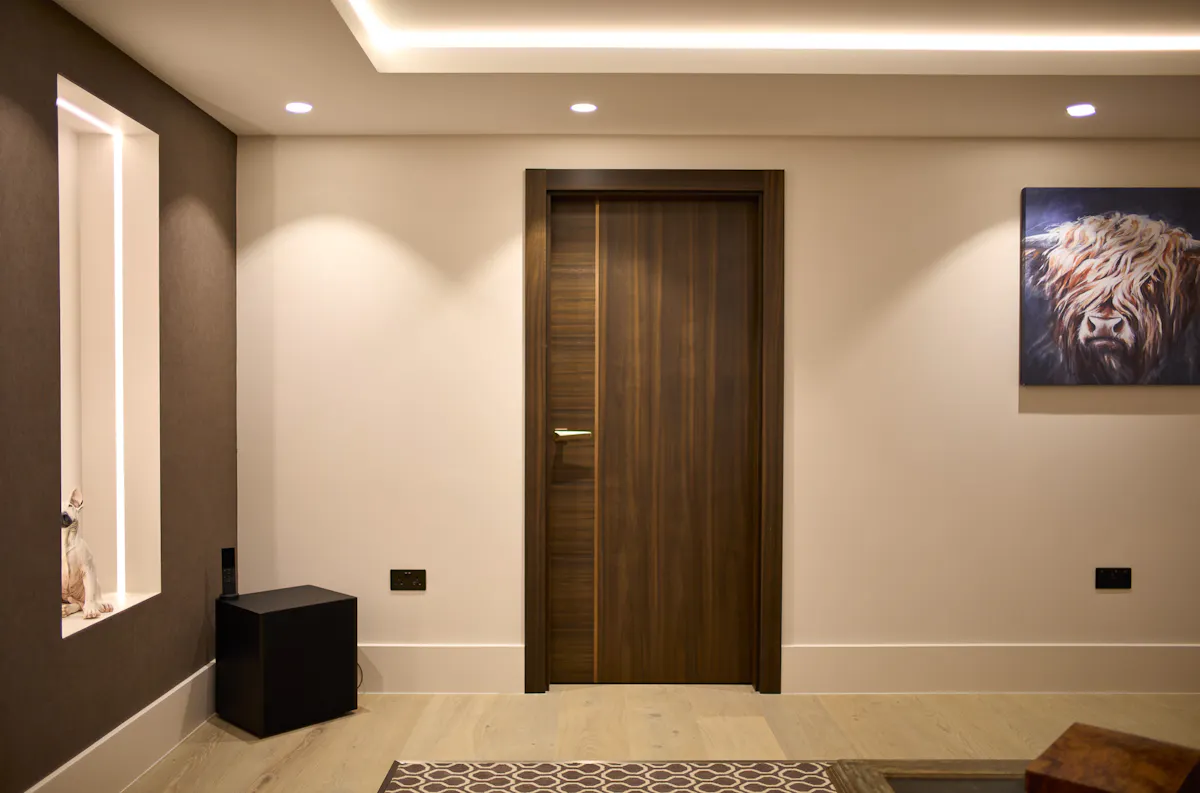
Metal inlays can prove particularly powerful when used to create tension between two materials. Pairing warm brass against smoked eucalyptus, for example, can introduce bold, architectural contrast that effortlessly commands a space. Or, if the tones were to be switched, integrating blackened steel with a light heartwood such as olive ash, it can create a unique graphic interplay that feels distinctly contemporary. This approach can be transformative in communal areas, where doors take on a more expressive focal role, or to champion a more confident design language within bold interior schemes.
Shaping seamless cohesion through spaces
Alternatively, metal decorative panels for doors can be used to unify rather than contrast. Subtle bronze inlays set into walnut or crown-cut oak can echo surrounding pieces of furniture, from dining table ironmongery to lighting fixtures, creating harmony throughout the home. In open-plan layouts or flowing transitions between interior zones, this approach helps doors feel embedded within the wider design narrative, reinforcing a sense of cohesion without isolated detail vying for attention. Our painted steel doors can even be perfectly matched to leading paint brands like Farrow & Ball, if you like the qualities of metal but want a more blended aesthetic.
Building boldly geometric styles that excite
Decorative metal for doors does not have to be confined to linear formations. For more expressive architectural visions, inlays can take on a more sculptural role. When curved borders, offset patterns, or asymmetrical compositions are integrated into the leaf, they introduce rhythm and movement that breathe life into the interior. These features shift with light and perspective, offering something unexpected at every angle. For example, a full-height oak door with a sweeping, off-centre brass arc that spans corner to corner can soften a rigid architectural envelope. Or, a sequence of shimmering brushed aluminium rectangles set into stained ash can create a layered façade effect across a run of doors.
Leveraging lines to guide the eye
More than decorative elements, metal inlays can actively shape how a space is experienced. Fine vertical lines set into an extra-tall door can draw the eye upwards, exaggerating ceiling height and cementing grandeur. Similarly, horizontal highlights spanning across a double door or sliding formation can elongate sightlines, guiding movement through a space. This approach translates seamlessly into more complex configurations too, such as steel frame bi-fold doors, where integrated inlays within the frame itself can reinforce symmetry and structure across wider openings.
Focusing on feel and the sensory experience
Material contrast can be incredibly tactile, particularly where the smooth timber surface meets the cooler, more resistant finish of the metal. This experiential quality can be elevated further through subtle detailing too. With lightly dimpled brass door strips set into deep walnut or gently textured steel inserts within oak, you introduce moments of variation that catch the fingertips with daily use. While seemingly subtle, these interventions create a more immersive and considered interaction overall, inviting engagement beyond first glance.
Making the most of material qualities
While aesthetic impact often leads, metal inlays also bring inherent performance benefits. With decorative steel doors, for example, the integrated alloy provides strength and stability, which, when paired with engineered timber cores, compounds structural integrity and endurance. Elsewhere, copper offers natural antimicrobial properties, making it a considered choice for frequently touched surfaces, while aluminium inlays can be perforated to effortlessly enhance acoustic absorption. Even thermally, metals such as bronze retain and radiate warmth differently, contributing to a more balanced internal environment.
Adding finesse with finishes
The finish of the metal ultimately defines its character within a scheme. Polished brass can introduce a sharper reflective quality, while satin or brushed finishes offer a more understated effect. For a more expressive approach, bronze doors with aged patinas or darkened finishes can add depth and richness, particularly when specifying oversized doors, while copper doors often bring a warmer, more tonal variation. At the more industrial end of the spectrum, corten steel introduces a stunning weathered quality to produce the look of rusty metal doors that embrace raw, architectural honesty.
Build your peerless bespoke creation
If you have an eye for decorative metal, interior doors are the perfect canvas. However, while inlays open up a near-limitless design landscape, true success lies in early integration. As part of a fully bespoke process, this feature is best when designed as one with the door from the outset, ensuring every material pairing and structural placement works exactly as intended. At Deuren, each inlay is also applied by hand in our Yorkshire workshop, giving complete control over the quality and finish.
But peerless bespoke craftsmanship is not all that sets us apart. As a true partner, we work as an extension of the wider build team too, collaborating closely with architects, interior designers, and self-builders to realise truly individual concepts. So, you can be confident in the calibre of every curation. We’re also trusted by leading names like Grand Designs – both as a Premium Partner and within several showstopping builds on the show – to shape doors that are not only visually striking, but built to perform and endure beautifully. In other words, no one does it like Deuren.
If you’re keen to explore the majesty of metal inlays in further detail, book a private tour of our workshop and showroom. Or, get in touch to talk through your next bespoke project with an expert.